What Happens If a Home Fails Inspection? 3 Paths Buyers Can Take in Ontario
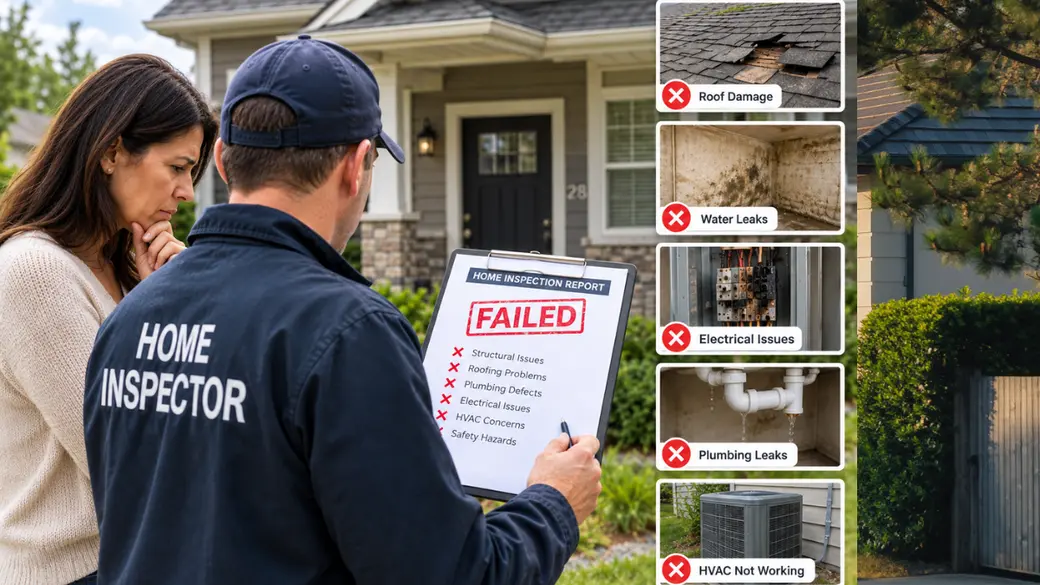
A home inspection can turn up anything from a loose railing to a cracked foundation. If the report comes back with serious problems before your deal is firm, you have more options than most buyers realize. Here is what a failed inspection means in Ontario and the three paths you can take.
The short answer: A failed inspection does not automatically cost you your deposit or force you to buy the house. What happens next depends on how your inspection condition is worded and what you do before its deadline. In most cases you can walk away, renegotiate or waive the condition and go ahead.
How an Inspection Condition Works
Many Ontario resale offers are conditional on a home inspection. The condition gives you a set period, written into your offer, to inspect the home and decide whether to go ahead.
The wording matters. Under common wording, if you do not give written notice that the condition is fulfilled or waived by the deadline, the agreement becomes null and void. Talking with the seller during that time does not extend the deadline unless you both agree in writing. Some clauses are written differently, so ask your lawyer exactly what yours requires.
How Much Say Do You Have?
Many inspection clauses say the report must be satisfactory to the buyer "in their sole and absolute discretion." The Ontario Court of Appeal has read that wording as letting the buyer judge the report subjectively (Marshall v. Bernard Place Corp., 2002).
That freedom has limits. You are still expected to act honestly and in good faith. Hiring an unqualified inspector or skipping the inspection could make it harder to cancel.
Some clauses use a more objective test instead. For example, a clause may let the seller fix problems that cost less than a set dollar amount, and the buyer must then close.
Path 1: Walk Away
If the report shows problems you are not willing to take on, you can usually end the deal under the condition.
- Give notice exactly the way your clause requires, and before the deadline
- Keep a copy of the inspection report
- Do not let the deadline pass while you are still deciding
Path 2: Renegotiate
A tough report is often a starting point for a new conversation with the seller. Common options include:
- A lower purchase price
- The seller completing specific repairs before closing
- A credit or holdback set aside for repairs
Any change must go into a signed amendment before the deadline. The seller does not have to accept new terms, and an unsigned proposal does not change the condition or its deadline.
Path 3: Waive the Condition and Go Ahead
Sometimes the issues are manageable and the home is still the right one. Once you waive the condition, the deal is firm. Before you waive, get repair quotes for the big items so you know what you are taking on.
What Happens to Your Deposit
Your deposit is usually held in trust by the seller's brokerage. Even when a deal ends under a condition, the Real Estate Council of Ontario (RECO) guides brokerages to release the deposit only when both buyer and seller sign a mutual release, or with a court order.
If the seller refuses to sign, your refund can be delayed. Going to court can cost more than the deposit itself, so speak with your lawyer early.
What the Seller Had to Tell You
Ontario law separates two kinds of defects:
- Patent defects are problems a buyer or home inspector can find through reasonable inspection. The seller does not have to point them out, but must not hide them.
- Latent defects are hidden problems that make a home unfit to live in, dangerous or potentially dangerous. The seller must disclose latent defects they know about.
Sellers who try to hide defects can face added liability. That said, courts have generally required buyers to prove the seller knew about the defect, which can be hard to do.
Time limits apply. Under Ontario's Limitations Act, 2002, the basic deadline to start a claim is two years from the day the claim was discovered. If you think a seller hid something, speak with a lawyer right away.
Your Inspection Checklist
- Read your inspection clause before you sign the offer.
- Book a qualified inspector as soon as your offer is accepted.
- Attend the inspection so you can ask questions on site.
- Get repair quotes for any major items.
- Decide with your agent and lawyer well before the deadline.
- Put everything in writing, including notices and amendments.
Buying your first home? Download my Free Buyer's Guide or visit my First-Time Home Buyers page.
Facing a Tough Inspection Report? Let's Talk
A failed inspection does not have to end your plans. As an Accredited Buyer's Representative (ABR®), I help buyers understand the report, weigh their options and negotiate with confidence before the deadline.
Book a Free Buyer ConsultationTarlika Sehgal, REALTOR®, SRS®, ABR® | eXp Realty Of Canada, Inc., Brokerage
Sources
- RECO Bulletin 7.4: Facts a seller has a legal obligation to disclose
- Siskinds: What happens to your real estate deposit when conditions aren't fulfilled
- Axess Law: The wording of a home inspection clause can cost you thousands of dollars
- REM: Buyers' failure to waive conditions nullifies agreement of purchase and sale
- Bob Aaron: How the courts have shown it's buyer beware when purchasing property
- Ontario e-Laws: Limitations Act, 2002
- Hull & Hull: When exactly does the two-year limitation period expire?
This article is general information, not legal advice. Every agreement is different. Please speak with a real estate lawyer about your own situation before your condition deadline. Information is current as of October 2026.
Categories
Recent Posts